
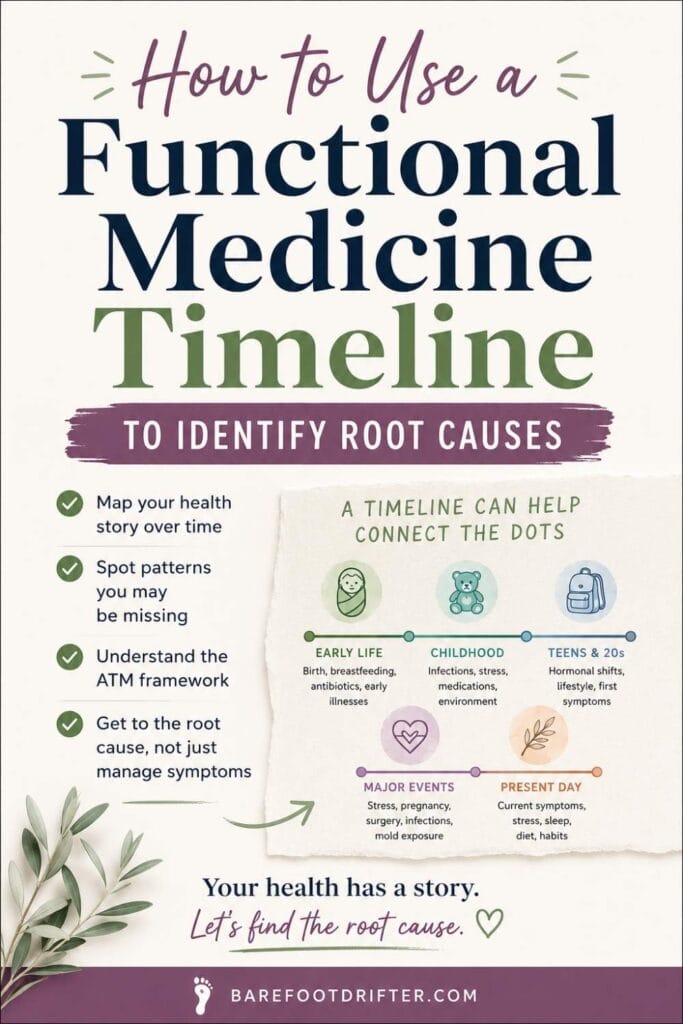
How to Use a Functional Medicine Timeline to Identify Root Causes
When I first started learning about functional medicine, one idea completely changed how I see health:
Symptoms don’t just appear out of nowhere, they tell a story.
After sharing more about the Functional Medicine Matrix and systems biology in previous posts, a few people asked me to break this concept down even further. One of the tools that helped me understand this is something called a functional medicine timeline, which is used in functional medicine to help uncover patterns and possible root causes over time.
Because the truth it, symptoms often develop over time, not overnight.
If you missed my earlier posts on understanding the Functional Medicine Matrix in simple terms and how I’m learning systems biology in functional medicine health coaching, they explain why the body needs to be viewed as one connected system instead of isolated symptoms.
This post may contain affiliate links, which means I may earn a small commission at no extra cost to you.
Quick Look: Functional Medicine Timeline
Helps connect symptoms over time
Identifies root causes, not just symptoms
Uses the ATM framework (Antecedents, Triggers, Mediators)
Beginner-friendly tool for understanding your health
Symptoms don’t appear out of nowhere. They tell a story.
And that story?
It unfolds over time.
One of the tools that helped me understand this is something called a functional medicine timeline. It’s a simple but powerful way to look at your health history and start connecting the dots.
If you’ve ever wondered: “Why did my symptoms start when they did?”
This approach can help you see things in a whole new way.
Why a Functional Medicine Timeline Matters
In traditional healthcare, most visits focus on:
- what you’re feeling right now
- lab results
- family history
- medications
And while those things matter, they don’t always tell the full story.
A functional medicine timeline adds something deeper: your life context.
Instead of only asking, “What is happening right now?”
We start asking:
- When did you last feel truly well?
- What changed before your symptoms started?
- Were there stressors, illnesses, or major life events beforehand?
Because the truth is, chronic symptoms don’t usually happen overnight. Your body often adapts and compensates for years before things finally show up.
A timeline helps bring those hidden patterns to the surface.
This is also why so many people can feel frustrated when they are trying to eat healthier, sleep better, or reduce stress but still don’t feel well. I talked more about that in my post on why you still don’t feel better and what helps because symptoms are often connected to deeper patterns happening beneath the surface.
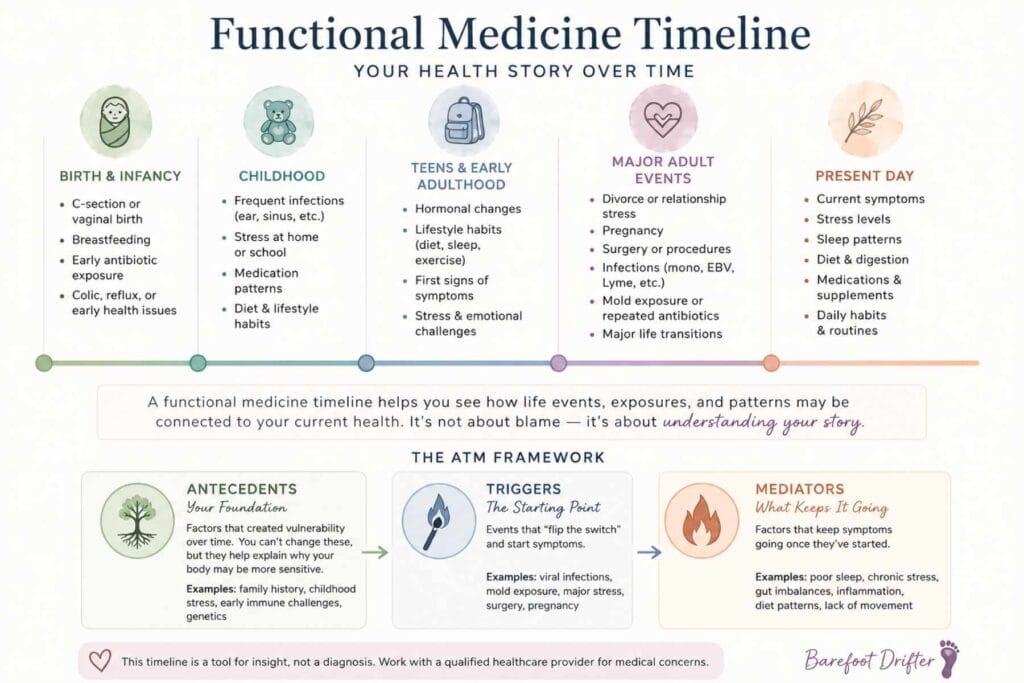
A functional medicine timeline helps organize those patterns visually so you can better understand how symptoms may have developed over time.
How to Build a Functional Medicine Timeline (Simple Version)
This doesn’t have to be complicated. Think of it as creating a simple map of your life and noting anything significant that stands out along the way.
Start with early life.
Birth & Infancy
- C-section or vaginal birth
- breastfeeding
- early antibiotic exposure
Then move into Childhood
- Frequent infections
- Stress at home or school
- Medication patterns
Teens & Early Adulthood
- Hormonal changes
- Lifestyle habits
- First signs of symptoms
Major Adult Events
- Divorce or relationship stress
- Pregnancy
- Surgery
- Infections (like mono or Epstein-Barr)
- Mold exposure or repeated antibiotics
Present Day
- Current symptoms
- Stress levels
- Sleep habits
- Diet
When you lay everything out like this, something interesting happens: patterns start to appear.
This is where things really start to click.
What Is the ATM Framework in Functional Medicine (Made Simple)
One of the most helpful frameworks I’ve learned is called ATM:
- Antecedents
- Triggers
- Mediators
It sounds complicated, but it’s actually very simple.
Antecedents (Your Foundation)
These are things that made your body more vulnerable over time.
Examples:
- family history
- childhood stress
- early immune challenges
- genetics
You can’t change these. But they help explain why your body may be more sensitive.
Triggers (The Starting Point)
These are the events that “flip the switch” and start symptoms.
Examples:
- a viral illness (like mono)
- mold exposure
- major stress
- surgery
- pregnancy
Think of triggers as lighting the match.
Mediators (What Keeps It Going)
These are the things that keep symptoms going once they’ve started.
Examples:
- poor sleep
- chronic stress
- gut imbalances
- inflammation
- diet patterns
- lack of movement
This is where change can actually happen.
Connecting the Dots (Without Diagnosing)
One of the most important lessons I’m learning is this:
Seeing patterns is not the same as diagnosing.
Instead, it looks like this:
- “My fatigue started after mono.”
- “My digestion worsened after antibiotics.”
- “My symptoms began after moving into that house.”
We’re not labeling anything.
We’re simply:
- noticing patterns
- asking better questions
- encouraging deeper conversations with healthcare providers
And honestly? That alone can be incredibly powerful.
Why This Way of Thinking Matters
Before learning this, I used to think about health in separate pieces.
Now I see things more like:
- stress affecting inflammation
- gut health impacting hormones
- immune responses tied to past events
The body doesn’t operate in isolated systems. Everything is connected, and every symptom is part of a larger story.
Your Story Matters
This is why I feel so drawn to functional medicine.
A functional medicine timeline can be such a powerful tool. Sometimes simply looking at your health story in a new way can help connect dots you never noticed before.
Because it’s not just about managing symptoms. It about understanding your history, your patterns, and your story. And sometimes, healing doesn’t begin with a new supplement or test. Sometimes is begins with one simple question: “When did you last feel like yourself?”
Wellness Resources I’ve Been Loving Lately
As I continue learning more about functional medicine and whole-body wellness, I’ve been trying to focus on small daily habits that support stress management, sleep, movement, and creating a healthier environment overall.
These are a few simple wellness tools I’ve personally been loving lately and thought I’d share in case they help support wellness journey too.
Blue Light Glasses: I mainly use these all day while I am at work or editing blog posts. While research on blue light glasses is still mixed, many people find them helpful for reducing digital eye discomfort and creating better evening screen habits. For me personally, it has helped with eye strain and headaches.
Herbal Stress Support tea: This kind of tea has become one of my favorite little evening rituals. It feels grounding, calming, and honestly just reminds me to slow down for a few minutes.
Walking Pad for Daily Movement: One thing I’m learning more and more is that movement does not have to be extreme to matter. Sometimes simple daily walks and consistent movement habits are more sustainable than trying to do everything perfectly.
Air Purifier: I’ve also become more aware of how our environment can impact how we feel overall. Creating a cleaner, calmer home environment has become something I’m paying for attention to lately.

Wellness Disclaimer: I’m currently learning and training in functional medicine health coaching and sharing my educational journey along the way. This content is not intended to diagnose or replace medical advice. Always speak with a qualified healthcare professional regarding your health concerns.
